
CDI electronics troubleshooting is essential for small engine repair‚ particularly outboards; this guide offers practical tips and DVA charts for optimal performance.
This comprehensive resource assists in diagnosing and resolving outboard ignition system issues‚ verifying power‚ testing signals‚ and addressing grounding concerns effectively.
CDI systems are vital for engine operation‚ and understanding how to identify and fix problems saves both time and money for all skill levels.
Welcome to a detailed exploration of CDI ignition systems‚ designed to empower you with the knowledge to maintain peak engine functionality and reliability.
What is a CDI System?
CDI‚ or Capacitor Discharge Ignition‚ represents a crucial ignition system found in numerous outboard and inboard marine engines‚ as well as various small engine applications. Unlike traditional ignition systems‚ a CDI system doesn’t rely on contact points‚ eliminating wear and tear and providing a more reliable spark.
The core principle involves storing an electrical charge within a capacitor‚ then rapidly discharging it through an ignition coil to create a high-voltage spark. This spark ignites the air-fuel mixture within the engine’s cylinders‚ initiating the combustion process. Key components include the CDI module‚ stator‚ trigger coil‚ and flywheel‚ all working in harmony.
CDI systems are favored for their simplicity‚ efficiency‚ and ability to deliver a powerful spark even at higher engine speeds. Understanding the fundamental operation of a CDI system is paramount for effective troubleshooting‚ allowing technicians to pinpoint issues within the circuit and restore optimal engine performance.
Why Troubleshooting is Important
Effective CDI electronics troubleshooting is paramount for maintaining optimal engine performance and preventing costly repairs. Ignoring ignition system issues can lead to reduced fuel efficiency‚ power loss‚ and even complete engine failure‚ especially in marine environments.
A systematic approach to diagnosis saves valuable time and resources‚ avoiding unnecessary component replacements. Identifying and resolving problems promptly minimizes downtime and ensures reliable operation. Skilled troubleshooting also protects against potential safety hazards associated with malfunctioning ignition systems.
Furthermore‚ understanding CDI system intricacies empowers both novice and experienced technicians to confidently address a wide range of issues. Utilizing tools like DVAs and oscilloscopes‚ combined with a logical process‚ allows for accurate fault isolation and efficient repairs‚ ultimately extending the engine’s lifespan.

Essential Tools for CDI Troubleshooting
CDI electronics troubleshooting demands specialized equipment‚ including a Digital Volt/Ammeter (DVA)‚ an oscilloscope‚ and a reliable multimeter for accurate diagnostics.
Digital Volt/Ammeter (DVA)
A Digital Volt/Ammeter (DVA) is an indispensable tool for CDI electronics troubleshooting‚ providing crucial insights into the electrical characteristics of the ignition system. It accurately measures voltage‚ current‚ and resistance‚ enabling technicians to pinpoint faults within the circuit.
CDI Electronics provides specific DVA charts tailored to their products‚ simplifying the diagnostic process by offering reference values for various components. Utilizing these charts allows for quick comparison of measured values against expected norms‚ identifying deviations that indicate potential issues.
DVAs are particularly useful for verifying the power supply to the CDI module‚ testing the output of the stator‚ and assessing the functionality of the trigger coil. Proper DVA usage‚ combined with reference charts‚ significantly enhances the efficiency and accuracy of CDI system diagnostics.
Understanding DVA readings is fundamental to effective troubleshooting‚ allowing for a systematic approach to identifying and resolving ignition-related problems.
Oscilloscope
An oscilloscope is a powerful diagnostic tool for CDI electronics troubleshooting‚ offering a visual representation of electrical signals over time. Unlike a DVA‚ which provides static readings‚ an oscilloscope displays waveforms‚ revealing subtle anomalies that can indicate underlying problems within the ignition system.
When troubleshooting CDI systems‚ an oscilloscope allows technicians to analyze the shape‚ frequency‚ and amplitude of signals from the stator‚ trigger coil‚ and CDI module itself. This detailed analysis can uncover intermittent faults or signal distortions that would be missed by other methods.
Interpreting these waveforms requires a solid understanding of CDI circuit operation‚ but the ability to visualize signal behavior provides invaluable insight into system performance. It’s crucial for identifying weak or distorted signals‚ confirming proper timing‚ and verifying component functionality.
Mastering oscilloscope use significantly elevates the depth and accuracy of CDI ignition diagnostics.
Multimeter
A multimeter is a fundamental tool for CDI electronics troubleshooting‚ providing essential measurements of voltage‚ resistance‚ and continuity. While less dynamic than an oscilloscope‚ it’s crucial for verifying the basic electrical health of the CDI system’s components.
Technicians use multimeters to check the power supply to the CDI module‚ ensuring it receives the correct voltage. Resistance measurements help identify open or shorted windings in the stator and trigger coil‚ while continuity tests confirm proper connections and wiring integrity.
Although a multimeter won’t reveal subtle signal distortions‚ it efficiently pinpoints obvious faults like broken wires‚ failed components‚ or incorrect voltage levels. It’s an indispensable first step in any CDI troubleshooting procedure.
Proper multimeter usage‚ combined with a systematic approach‚ forms the foundation of effective CDI ignition diagnostics.
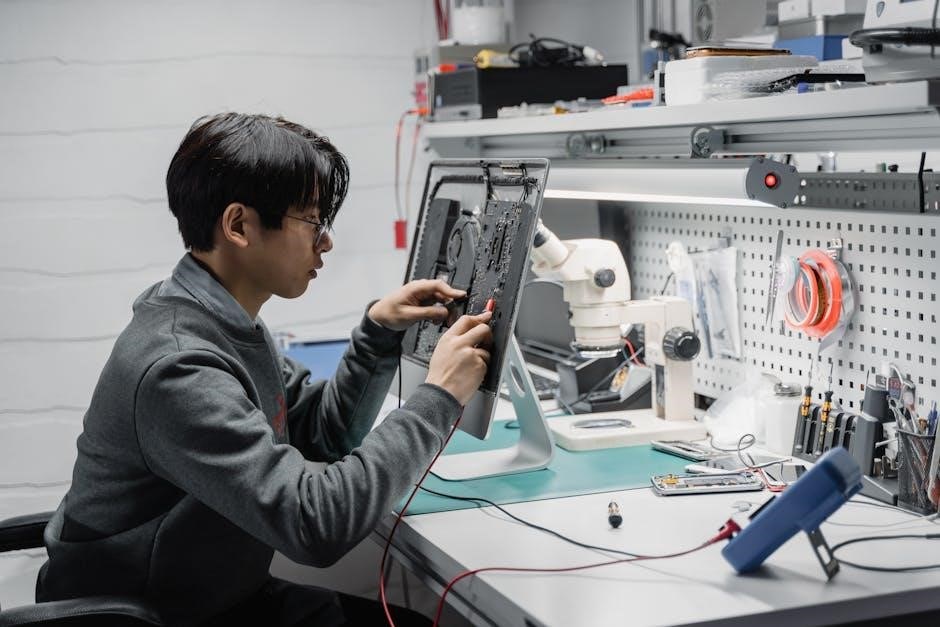
Common CDI System Components & Their Functions
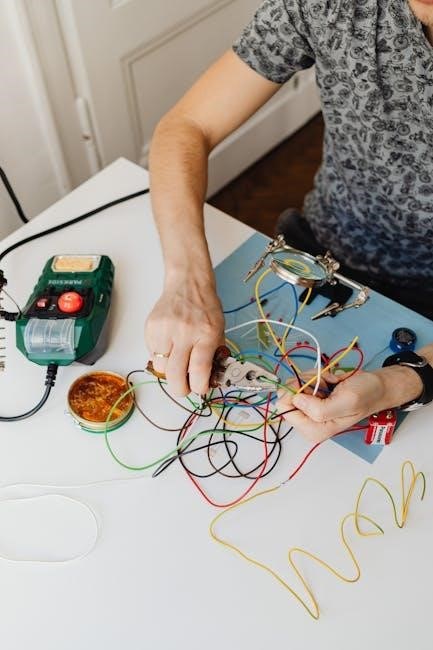
CDI systems rely on key components – the module‚ stator‚ trigger coil‚ and flywheel – working in harmony to generate the spark for reliable engine ignition.
Understanding each part’s role is vital for effective troubleshooting and diagnosing issues within the CDI electronics of your marine engine.
CDI Module
The CDI module is the brain of the ignition system‚ responsible for converting the low voltage from the stator into the high voltage needed to create a spark at the spark plugs. It acts as an electronic switch‚ discharging a capacitor when triggered by the pulser coil.
Troubleshooting the CDI module often involves checking for proper voltage input from the stator and a clean‚ strong trigger signal from the pulser. A faulty CDI module can manifest as a no-spark condition‚ intermittent spark‚ or a weak spark. Testing typically requires a Digital Volt/Ammeter (DVA) or an oscilloscope to analyze the module’s output waveform.
Internal failures within the CDI module are common‚ and often require replacement rather than repair. Look for signs of overheating or physical damage; Proper grounding of the CDI module is also crucial for its correct operation; a poor ground can lead to erratic performance.
Stator
The stator is a crucial component‚ functioning as the power source for the CDI system. It generates a low-voltage AC signal when the flywheel rotates over its poles. This AC voltage is then converted to DC voltage‚ which charges the capacitor within the CDI module.
Troubleshooting the stator involves verifying its output voltage using a multimeter. A weak or absent signal from the stator is a common cause of ignition problems. Inspect the stator coils for any signs of damage‚ such as open circuits or shorted windings.
Proper grounding of the stator is essential for optimal performance. A poor ground connection can significantly reduce the output voltage. Use a DVA to check for voltage drop across the stator’s ground connections‚ ensuring a solid electrical path.

Trigger/Pulser Coil
The trigger coil‚ also known as the pulser coil‚ plays a vital role in timing the ignition spark. As the flywheel passes the trigger coil‚ it generates a pulse that signals the CDI module to discharge the capacitor and initiate the spark. This precise timing is critical for efficient engine combustion.
Troubleshooting the trigger coil involves checking its resistance and output waveform. Use a multimeter to verify the coil’s resistance falls within the manufacturer’s specifications. An oscilloscope is invaluable for examining the waveform‚ ensuring a clean and strong pulse is generated.
Air gaps and proper alignment are crucial for trigger coil function. Incorrect gaps can lead to weak or nonexistent pulses. Inspect the coil for physical damage and ensure it’s securely mounted‚ maintaining the correct distance from the flywheel.
Flywheel
The flywheel serves multiple functions within a CDI ignition system. Beyond providing rotational inertia to smooth engine operation‚ it houses key components integral to ignition timing. These include magnets or trigger points that interact with the stator and trigger/pulser coil‚ initiating the spark sequence.
Troubleshooting the flywheel involves a careful inspection for cracks‚ damage‚ or loose magnets. A damaged flywheel can disrupt the magnetic field‚ leading to inconsistent or absent spark. Check the keyway for shearing‚ as this will throw off timing.
Proper flywheel alignment and torque are paramount; Incorrect installation can alter the timing and cause significant engine performance issues. Always adhere to the manufacturer’s specifications when installing or replacing a flywheel‚ ensuring correct torque values are applied.

Troubleshooting Steps: A Systematic Approach
Effective CDI troubleshooting demands a methodical process: visual inspection‚ power supply verification‚ and component testing‚ utilizing tools for accurate diagnosis and repair.
Step 1: Visual Inspection
Begin with a thorough visual inspection of all CDI system components. Carefully examine the CDI module‚ stator‚ trigger coil‚ and flywheel for any signs of physical damage‚ such as cracks‚ burns‚ or corrosion.
Inspect wiring harnesses and connectors for loose connections‚ frayed wires‚ or damaged insulation. Pay close attention to grounding points‚ ensuring they are clean and secure. A poor ground is a frequent cause of CDI system failures.
Look for any evidence of water intrusion‚ which can cause corrosion and short circuits. Check for any melted or discolored components‚ indicating overheating. Document any visual anomalies found during this step‚ as they can provide valuable clues during further troubleshooting.
Remember‚ a simple visual check can often reveal obvious problems‚ saving time and effort in more complex diagnostic procedures.
Step 2: Checking the Power Supply
Verify the power supply to the CDI module is within the manufacturer’s specified range. Use a digital volt/ammeter (DVA) to check the battery voltage and ensure it’s adequate for proper system operation. A weak battery can cause intermittent or complete CDI failure.
Check the charging system to confirm the battery is being properly charged while the engine is running. Inspect the stator’s output voltage and amperage‚ comparing the readings to the service manual specifications.
Examine the wiring between the battery‚ stator‚ and CDI module for voltage drops‚ indicating a potential wiring issue. Ensure all connections are clean and tight. A stable and correct power supply is crucial for reliable CDI performance.
Document all voltage and amperage readings for comparison and future reference.
Step 3: Testing the Trigger/Pulser Coil
The trigger coil generates a signal that initiates the spark. Use a DVA to measure the AC voltage output of the trigger coil while cranking the engine. Compare the measured voltage to the manufacturer’s specifications; a low or absent signal indicates a faulty coil.
Inspect the air gap between the trigger coil and the flywheel. An incorrect gap can significantly affect the signal strength. Ensure the coil is securely mounted and free from damage.
Check the wiring connecting the trigger coil to the CDI module for continuity and shorts. A damaged wire or poor connection can disrupt the signal.
If possible‚ use an oscilloscope to visualize the trigger coil’s waveform‚ looking for a clean‚ consistent signal.

Specific Troubleshooting Scenarios
Diagnosing CDI issues involves addressing common problems like no spark‚ intermittent spark‚ or weak spark conditions‚ requiring systematic testing and analysis.
Understanding these scenarios and applying appropriate troubleshooting steps ensures efficient repair and restores optimal engine performance quickly and reliably.
No Spark Condition
A complete lack of spark is a frequent issue in CDI systems‚ often stemming from a failure in the primary power supply or a faulty CDI module itself. Begin by meticulously verifying the battery voltage and ensuring a solid connection to the ignition switch.
Next‚ inspect the kill switch; a malfunctioning switch can prevent spark generation. Proceed to test the stator’s output voltage using a DVA‚ confirming it meets the manufacturer’s specifications. If the stator checks out‚ focus on the trigger coil‚ as a defective trigger coil won’t signal the CDI module to fire.
Carefully examine all wiring connections for corrosion or breaks‚ as poor grounding is a common culprit. Finally‚ if all other components test within range‚ the CDI module is the most likely cause and should be replaced or further tested by a qualified technician.
Intermittent Spark
An intermittent spark presents a more challenging diagnostic scenario than a complete no-spark condition‚ often indicating a connection issue or a component failing inconsistently. Start by thoroughly inspecting all wiring harnesses and connectors‚ paying close attention to those exposed to vibration or moisture.
Loose connections or corroded terminals can cause sporadic spark loss. Utilize a multimeter to check for voltage drops across wiring‚ identifying potential resistance points. Next‚ examine the CDI module and trigger coil for cracks or signs of overheating‚ which can lead to intermittent failures.
A failing stator can also produce an intermittent spark; test its output voltage while the engine is running and experiencing the issue. Finally‚ consider the possibility of a faulty ignition coil‚ as internal shorts can manifest as an inconsistent spark.
Weak Spark
A weak spark signifies insufficient energy to reliably ignite the air-fuel mixture‚ leading to misfires and poor engine performance. Begin by verifying the battery voltage and ensuring it meets the manufacturer’s specifications‚ as low voltage directly impacts spark strength. Next‚ inspect the spark plug itself – carbon fouling‚ incorrect gap‚ or wear can all contribute to a weak spark.
Focus troubleshooting on the CDI module‚ stator‚ and trigger coil. Use a DVA to check the stator’s output voltage; a low reading indicates a potential stator issue. Similarly‚ test the CDI module’s charging circuit to confirm it’s delivering adequate voltage.
A failing trigger coil can also cause a weak spark‚ so verify its signal strength with an oscilloscope. Finally‚ examine the ignition coil’s primary and secondary resistance to identify any internal shorts or opens.
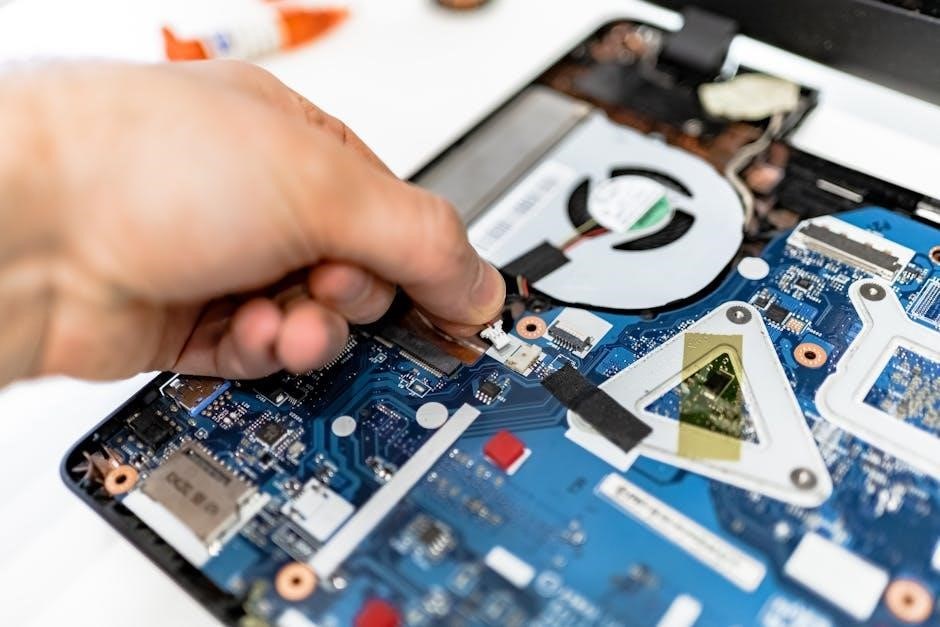
Advanced Troubleshooting Techniques
CDI system diagnosis benefits from waveform analysis using an oscilloscope and precise DVA readings‚ revealing subtle issues impacting ignition performance and reliability.
Using an Oscilloscope to Analyze Waveforms
Employing an oscilloscope is crucial for advanced CDI system diagnostics‚ allowing visualization of voltage and current waveforms throughout the ignition circuit. Proper waveform analysis can pinpoint intermittent faults undetectable by simpler methods. Begin by establishing a solid ground connection and probing the trigger coil signal; a clean‚ sharp pulse indicates proper function.
Next‚ examine the CDI module’s output waveform‚ looking for consistent voltage levels and minimal distortion. Deviations from the manufacturer’s specifications suggest a failing module. Analyzing the stator’s output reveals potential winding issues or voltage regulation problems. Remember to compare observed waveforms to known-good references whenever possible.
Pay close attention to rise and fall times‚ pulse width‚ and amplitude; these parameters offer valuable insights into component health. Oscilloscope analysis is particularly effective for identifying noise interference or signal degradation within the CDI system.
Interpreting DVA Readings
Digital Volt/Ammeter (DVA) readings are fundamental to CDI system troubleshooting‚ providing quick assessments of voltage and current flow. Begin by verifying the battery voltage; a fully charged battery is essential for accurate testing. Check the stator’s output voltage while cranking the engine‚ comparing the reading to the manufacturer’s specifications. Low voltage indicates a potential stator or wiring issue.
Next‚ measure the voltage at the CDI module’s power and ground connections‚ ensuring proper supply. Utilize the ammeter function to assess current draw during ignition; excessive current suggests a short circuit.
Refer to CDI Electronics’ DVA charts for specific voltage and resistance values for your engine model. Remember that DVA readings provide a snapshot in time; for intermittent issues‚ combine with waveform analysis for a comprehensive diagnosis.
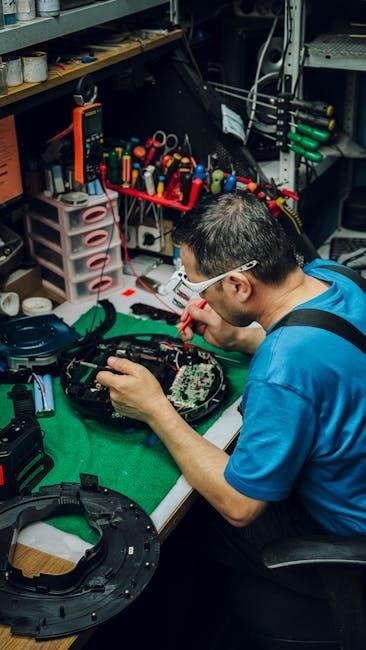
Safety Precautions When Troubleshooting CDI Systems
CDI systems involve high voltage‚ demanding strict safety adherence. Always disconnect the battery’s negative terminal before commencing any troubleshooting to prevent accidental shorts and electrical shock. Wear appropriate safety glasses to protect your eyes from potential sparks or debris.
Ensure the engine is completely cool before handling any components‚ as exhaust manifolds and engine parts can retain significant heat. When working with fuel lines‚ disconnect them in a well-ventilated area‚ away from ignition sources‚ to avoid fire hazards.
Never operate the engine in an enclosed space; exhaust fumes are deadly. If testing with the engine running‚ keep hands and tools clear of moving parts. Consult the engine’s service manual for specific safety guidelines and warnings.
Leave a Reply